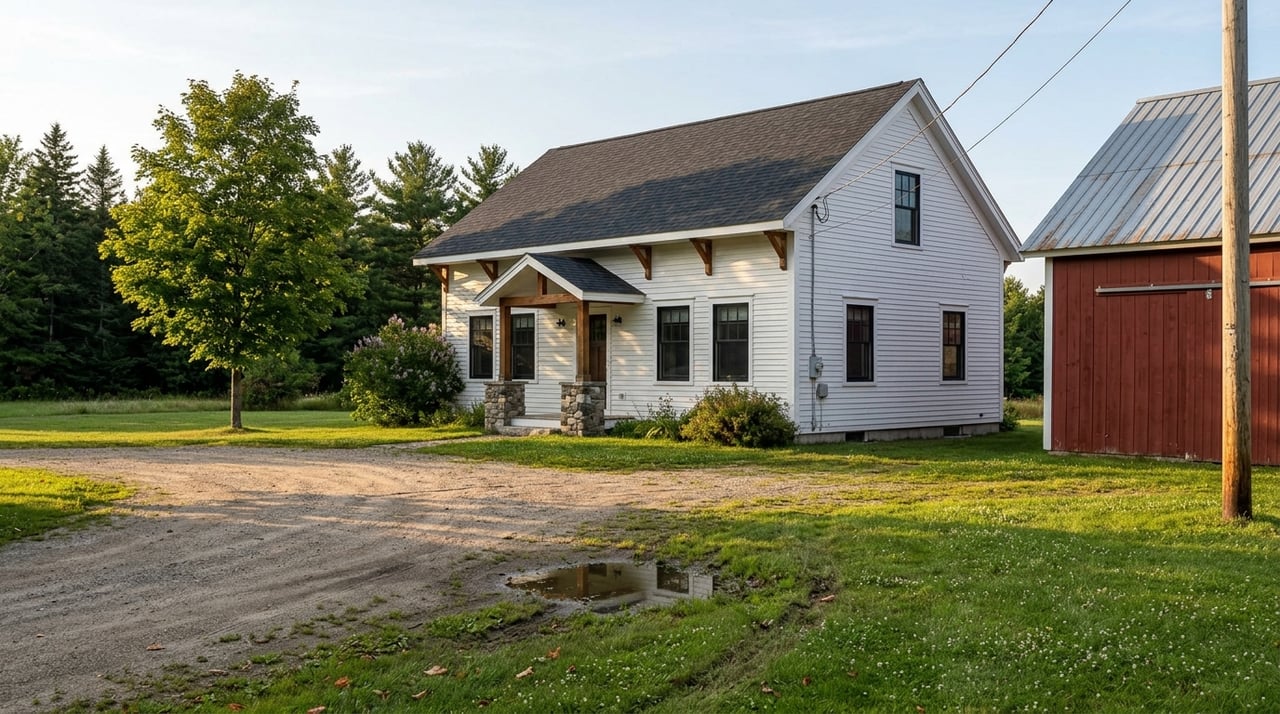
Buying a farm or country home near Ulysses can be exciting, but it also asks more of you than a typical in-town purchase. When a property comes with acreage, barns, a well, or septic, the land and systems often matter just as much as the house. If you want to buy with confidence, it helps to know what to check before you fall in love with the view. Let’s dive in.
Why rural buying is different near Ulysses
Potter County is deeply rural, and that shapes how you should evaluate property here. The county had 16,396 residents in the 2020 Census across 1,081.25 square miles of land, which works out to about 15.2 people per square mile. The USDA’s 2022 Census of Agriculture also counted 417 farms and 103,315 acres in farms in Potter County, with an average farm size of 248 acres.
That rural setting means many properties near Ulysses involve more than square footage and bedroom count. You may need to evaluate access roads, field conditions, utility availability, drainage, and outbuildings before you can tell whether a property truly fits your goals. A beautiful setting is important, but usable land and workable systems matter just as much.
It is also important to confirm exactly where the parcel sits. Ulysses Borough and Ulysses Township are separate municipalities, so the parcel location can affect permitting, tax questions, and land-use steps. Even two properties with Ulysses mailing addresses may not follow the same local process.
Start with your intended use
Before you tour too many properties, get clear on how you want to use the land. A country home with a few open acres calls for different due diligence than a property you hope to use for pasture, crops, or mixed farm use. Your plan should guide every question you ask.
If you want room for gardens, animals, or hobby farming, total acreage alone does not tell the full story. Penn State Extension notes that total acreage can overstate how much land is actually usable. A parcel may look large on paper but include steep ground, wet areas, wooded sections, or other limits.
A simple way to stay focused is to make a short list of your must-haves before you shop. That list might include:
- Open field acreage
- Barn or equipment storage
- Space for livestock or fencing
- Reliable road access
- Private setting with manageable maintenance
- Room for future improvements
Evaluate the land, not just the house
Land quality should be one of your top priorities when buying near Ulysses. Penn State Extension recommends reviewing soil quality carefully because it affects what can be produced profitably and how flexible the property may be in the future. That matters whether you want a working farm setup or simply more options down the road.
For crop ground, pasture, or hobby acreage, key site factors include slope, drainage, depth to water table, depth to bedrock or hardpan, flood risk, clay content, pH, and site history. These details can affect everything from where you can drive equipment to whether an area stays too wet for your intended use. They can also influence future costs.
Site history matters more than many buyers expect. Penn State specifically flags old orchard sites, soil contamination, and long-residual herbicide applications as issues that can limit future use. If you have plans for gardens, animals, or production, ask for any available records early.
Penn State also recommends using USDA Web Soil Survey and PaOneStop to estimate field boundaries and acreage before making decisions. Along with county tax maps and property records, these tools can help you understand what is actually usable and where the boundaries appear to run.
Check records and past land management
A rural property often tells its story through paperwork as much as through a showing. Records can reveal how the land has been managed and whether the parcel supports your intended use. If those records are missing or unclear, that is worth noting.
Penn State advises buyers to ask for items such as:
- Soil tests
- Pesticide application records
- Water-quality tests
- Wastewater plans and permits
- Conservation plans
- Other management documents tied to the property
These records can help you understand whether the land has been cared for in a way that supports your plans. They may also alert you to limits, maintenance needs, or follow-up questions for inspectors and local offices.
Inspect barns and outbuildings carefully
A farm or country property near Ulysses may come with more infrastructure than a standard home purchase. You might see barns, sheds, coolers, livestock pens, irrigation lines, or equipment storage areas. Those features can add value, but only if they are functional and fit your needs.
Penn State advises buyers to identify all existing infrastructure, figure out which improvements are needed for the intended operation, and clarify maintenance and repair responsibilities. In practical terms, that means looking beyond the charm of an old barn and asking what work it needs right now.
For older structures, focus on practical condition questions such as:
- Roof condition
- Foundation integrity
- Framing condition
- Signs of water intrusion
- Electrical service and lighting
Specialized scrutiny matters here. Barn safety guidance highlights heaters, electrical distribution, and lighting as common fire hazards, so these systems deserve extra attention during due diligence.
Think through access and road use
Access can be one of the most overlooked parts of a rural purchase. A property may feel private and appealing, but daily use becomes harder if roads are rough, steep, narrow, or hard to maintain. This matters even more if you plan to bring in feed, building materials, trailers, or larger trucks.
Penn State’s checklist recommends asking whether roads are traversable and maintained, whether large trucks can enter and exit safely, whether there is room for turnaround and equipment storage, and whether access ways can be improved with gravel or similar stabilization. These are practical questions that can affect both convenience and cost.
If changes to a driveway or access point involve a state highway, PennDOT says a Highway Occupancy Permit is required for building or changing a driveway, road, drainage, or utility facility on state highway land. If a property depends on state-road access, make sure you understand what is already approved and what future changes might require.
Pay close attention to wells and septic
Private wells and on-lot septic systems are common features in rural Potter County, and they deserve separate due diligence. Pennsylvania DEP states that it does not regulate private wells. Because of that, buyers should be proactive about testing and understanding the system they are inheriting.
DEP and the CDC recommend annual testing of private well water for total coliform bacteria, nitrates, total dissolved solids, and pH using a state-certified laboratory. Pennsylvania’s Department of Health also provides testing resources and notes that many adults rely on private wells. For a buyer, that means water quality should be treated as a core part of the inspection process, not an afterthought.
Septic systems follow a different path than public sewer. DEP explains that Pennsylvania’s Sewage Facilities Act requires local agencies, often the municipality, a multi-municipal organization, or a county health department, to administer permits for on-lot sewage systems. DEP also warns buyers to verify that subdivision, zoning, and building requirements have been met before purchasing a lot.
If the property has an older septic system, a dedicated septic inspection can be especially helpful. In Pennsylvania, real estate septic inspections are commonly done under PSMA/NOF standards to give buyers information on the condition of the entire system.
Confirm utilities and service early
Rural service can vary from parcel to parcel, even when properties are close together. Do not assume that power, cell reception, or other services will match what you have seen elsewhere nearby. What works fine at one address may be different a few miles away.
Penn State specifically recommends checking cell reception at the site and identifying power supply early. This is especially important if you work remotely, depend on mobile service, or plan to spend long stretches at the property. A quick check during a showing can save a lot of frustration later.
Review boundaries, easements, and local records
When acreage is involved, property lines deserve extra attention. Penn State’s checklist points buyers to tax maps and property records for borders, easements, neighboring ownership, and other boundary clues. These records can help you spot questions before they become bigger issues.
Potter County’s Planning and GIS department provides subdivision and land-development lookup resources, mapping tools, and the county subdivision and land development ordinance. Those local records can be a strong starting point for confirming lot lines, prior subdivisions, and related approvals.
If boundaries seem uncertain, or if a fence line does not clearly match available records, a survey may be one of the smartest investments you make. This is especially true if you plan to add fencing, use trails, build, or split uses across different parts of the land.
Ask about Clean and Green status
If the property is enrolled in Pennsylvania’s Clean and Green program, make sure you understand what that means before you close. The program provides a preferential assessment based on use value rather than fair market value. For many buyers, that can affect annual tax expectations in a meaningful way.
The state says Clean and Green generally requires 10 acres, though agricultural-use parcels under 10 acres may qualify if they generate at least $2,000 in annual farm income. If a landowner breaches the covenant, rollback taxes cover seven years plus 6% simple interest. Buyers should verify enrollment status and ask the county assessor about applications or status changes if they plan to change how the land is used.
Know when to bring in specialists
Some rural properties are straightforward, while others call for more specialized help. If the property has an older septic system, a private well, uncertain boundaries, access from a state road, older barns, unclear easements or mineral rights, or acreage you plan to use for production, extra professional input can be worth it.
Depending on the property, the most relevant specialists may include:
- A septic inspector
- A state-certified water-testing lab
- A surveyor
- A contractor or engineer familiar with farm structures
- The township office or Sewage Enforcement Officer
- The county planning or assessment office
The goal is not to make the process harder. It is to replace guesswork with clear information before you commit.
A practical path for buyers near Ulysses
Buying a farm or country home near Ulysses can be a great move if you approach it with the right questions. In a market where land, access, and rural systems play such a big role, careful due diligence helps you see the difference between a property that only looks good on paper and one that truly fits your plans.
At Mountain Valley Realty, Inc., local knowledge matters because rural properties are never one-size-fits-all. If you want help comparing acreage, coordinating showings, or asking the right questions before you buy, talk with a team that understands Potter County’s country properties from the ground up. Reach out to Mountain Valley Realty, Inc. to get started.
FAQs
What should you check first when buying a country home near Ulysses?
- Start with your intended use for the property, then review land usability, access, well and septic details, boundaries, and outbuildings based on that plan.
Why does parcel location matter around Ulysses?
- Ulysses Borough and Ulysses Township are separate municipalities, so the exact parcel location can affect permitting, tax questions, and land-use steps.
What land features matter most for a farm property near Ulysses?
- Key factors include slope, drainage, flood risk, soil quality, depth to water table, depth to bedrock or hardpan, pH, clay content, and site history.
How should you evaluate a private well at a rural Potter County property?
- Ask about past water-quality records and have the well water tested through a state-certified lab for total coliform bacteria, nitrates, total dissolved solids, and pH.
What should you know about septic systems when buying near Ulysses?
- Verify permits and local approvals, and consider a dedicated septic inspection, especially if the system is older or the property is not connected to public sewer.
What records should you review before buying acreage near Ulysses?
- Useful records include tax maps, property records, soil tests, water-quality tests, pesticide records, wastewater plans and permits, conservation plans, and county planning or subdivision records.
What is Pennsylvania Clean and Green for rural property buyers?
- It is a preferential tax assessment program based on use value rather than fair market value, and buyers should verify enrollment status and potential rollback tax consequences before changing the land’s use.