If you pulled up the Port Allegany housing numbers this month expecting a story, you'd be disappointed. The median list price sat at $174,000 in August 2026, unchanged from July and unchanged from a year earlier. Price per square foot slipped 4 percent year over year. No headline, no arrow pointing sharply up or down. Compare that to Ulysses, forty minutes north, where a handful of sales produced a 53 percent price swing that made for a much more dramatic chart and a much less useful one.
That flatness is the story. And the reason for it sits on a plot of land along the Allegheny River that most house hunters drive past without a second look.
The Friction Nobody Mentions First
Before anything else, a caution for anyone reading Port Allegany listing data the way they'd read it for a suburb of Pittsburgh or Erie: the sample size is small enough that any single sale can bend the numbers. ATTOM's property data shows just 70 residential sales closed in the trailing twelve months, out of 1,774 total residential properties in the borough. Only 8 of those sales happened in the first several months of 2026. That is not a market you can read the way you'd read a subdivision with hundreds of annual closings. A $40,000 estate sale or a contractor's flip can move the median more than any genuine shift in buyer demand.
This matters most at the negotiating table. If a seller points to a strong comp from three months ago, ask how many other sales happened that quarter. In a market this thin, one comp is an anecdote, not a trend.
The Glass Plant That's Been Here Since 1896
The reason Port Allegany's numbers hold steady instead of swinging like Ulysses' has less to do with real estate and more to do with what's happening a few blocks off Main Street. Ardagh Glass Packaging's Port Allegany facility marked its 130th anniversary in July 2026. The plant was built in 1896 by Olean Glass Co., making it the first glass factory established in McKean County, and it's still running today, producing roughly 750,000 glass containers a day for beer, wine, spirits, and food brands. State Representative Martin Causer presented the facility with a certificate from the Pennsylvania House of Representatives to mark the occasion, and Ardagh's operations leadership used the anniversary to recognize the roughly 270 people who currently work there.
Two hundred seventy jobs sounds modest until you consider the scale of the town around it. Port Allegany's own borough government lists Ardagh as the largest employer in the community, ahead of the shops, restaurants, and professional offices that fill out Main Street. A payroll that size, running continuously for over a century, does something specific to a local housing market: it removes the volatility that comes from a town's fortunes rising and falling with a single boom-or-bust industry. Nobody in Port Allegany is selling a house because a mill just announced layoffs. Nobody is bidding a house up because word got out that a new plant is hiring three hundred workers next spring. The employment base has simply been there, steadily, since before most of the housing stock was built.
What Steady Employment Does to a Housing Market
This is the part that a lot of buyers miss when they're comparing towns on price alone. A flat median in a place like Port Allegany isn't evidence that nothing is happening. It's evidence that the town's largest economic engine isn't generating the kind of shocks that move prices in either direction. Compare that to a market like Ulysses, where land-driven and lifestyle-property sales can be lumpy by nature: a single large-acreage sale to an out-of-area buyer, or a cluster of retirement purchases in one season, can swing a small-sample median dramatically in a way that has nothing to do with the underlying value of an average home there.
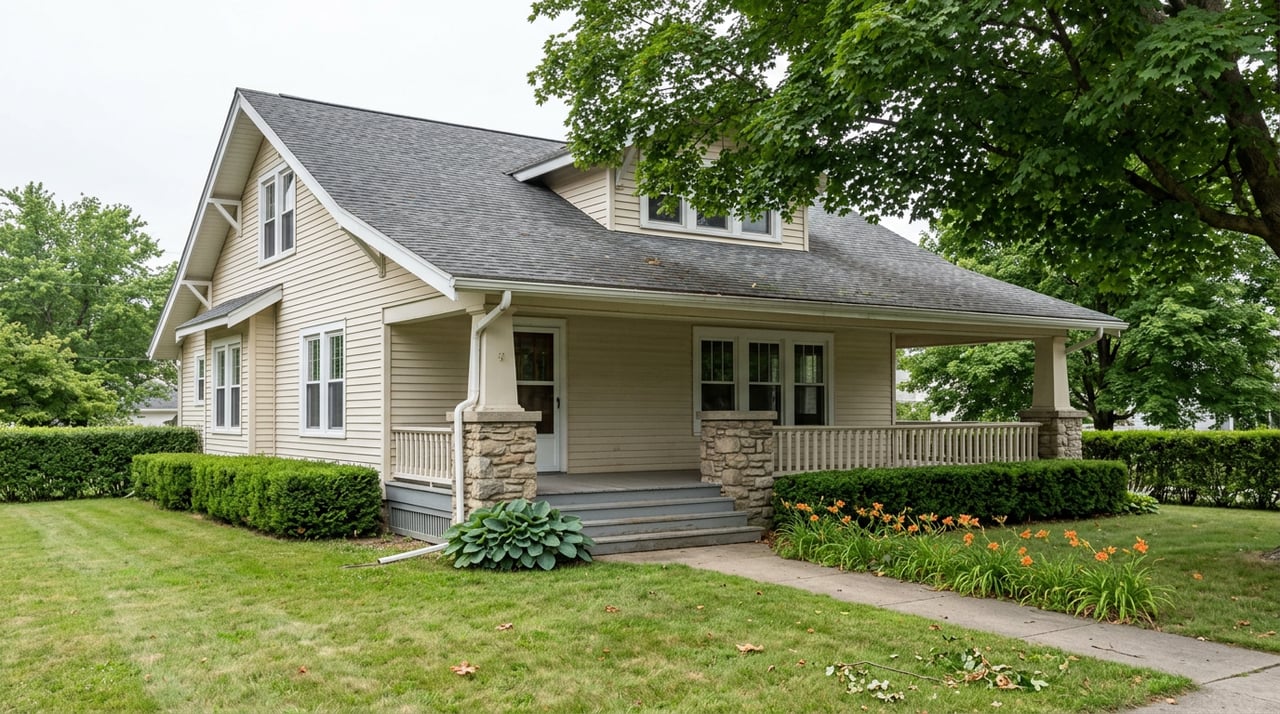
Port Allegany's housing stock backs this up. The average single-family home in the borough is about 67 years old and roughly 1,499 square feet, according to property data covering the current housing stock. That's a mature, largely built-out town. New construction isn't driving the numbers. Neither is a speculative land rush. What you're seeing in the price data is closer to what a stable, single-employer factory town should look like: modest movement, low volume, and a market where the asking price and the eventual sale price tend to stay close together because there's no external shock forcing sellers to chase the market up or buyers to bid it down.
Here's how the current numbers stack up:
| Metric | Figure | Period |
|---|---|---|
| Median list price | $174,000 | August 2026 |
| Price per square foot | Down 4% year over year | August 2026 vs. August 2025 |
| Median sold price | $156,000 | Trailing 12 months |
| Residential sales closed | 70 | Trailing 12 months |
| Residential sales YTD 2026 | 8 | Through mid-2026 |
| Total residential properties | 1,774 | Current |
| Average home age | 67 years | Current |
| Average home size | 1,499 sq ft | Current |
Read across that table and the picture is less "hot" or "cold" than it is "quiet." That quiet is what a century-old anchor employer buys a small town.
Reading the Thin Volume Correctly
If you're comparing Port Allegany against another Northern Tier community, or deciding whether now is the time to make a move here, the low sales volume changes how you should approach a few practical things:
- Don't anchor to a single comp. With 8 sales so far this year, one unusually high or low closing can distort what "market value" looks like on paper. Ask your agent for the full run of recent closings, not just the most convenient one.
- Expect list-to-sold gaps to vary more than in a larger market. A property that sits at $174,000 asking might close closer to $156,000, the current median sold figure, simply because there aren't enough concurrent sales to establish a tight, predictable spread.
- Weigh the age of the housing stock into your inspection plan. An average home age of 67 years means plumbing, wiring, and roofing questions come up more often than they would in a newer subdivision. Budget for an inspection that looks closely at those systems regardless of how well the house shows.
- Treat employment stability as a genuine data point, not a soft factor. A buyer weighing Port Allegany against a market driven by second-home or land speculation is weighing two different kinds of risk. One town's prices move because of harvest-season land sales and out-of-area retirees. The other's don't move much because the same employer has issued paychecks here since 1896.
What This Means If You're Comparing Towns
The mistake would be to read Port Allegany's flat chart as a lack of opportunity. A flat median in a market this size usually means the opposite: fewer surprises, less pressure to overbid, and a seller's expectations that tend to track reality rather than a speculative high. If you're the kind of buyer who wants predictability over upside, that's worth something. If you're chasing appreciation, you'll find more of that story in the acreage and lifestyle-property markets elsewhere in the region, along with more of the volatility that comes with it.
Either way, the number on the portal only tells you what happened. It doesn't tell you why. In Port Allegany, the why is a glass plant that's been running longer than the average house in town has stood.
A Few Quick Questions
Does a flat median mean prices in Port Allegany will never move? Not necessarily. It means the town hasn't seen the kind of shock, a plant closing, a sudden influx of buyers, a wave of land speculation, that tends to move prices quickly in either direction. A market can stay flat for years and then shift if the underlying conditions change.
Why are there so few sales to compare? Port Allegany is a small, largely built-out borough. With around 1,774 total residential properties and roughly 70 sales a year, turnover is naturally low compared to a growing suburb. That's normal for a stable, mature small town, not a sign of a struggling market.
Should I still get a full inspection if the market looks this steady? Yes. A steady price trend says nothing about the condition of an individual house. With an average home age of 67 years, get a full inspection regardless of how calm the surrounding market appears.
If you're weighing Port Allegany against another Northern Tier town, or trying to figure out what a specific listing's price actually says about the local market, Mountain Valley Realty can walk you through the real comps, not just the headline number. Call now to talk to a local agent who knows this market block by block.